Skip links

submit a case study

submit a case study

submit a case study

CUPE3902 + 3261

Bargaining
Case Study 📣

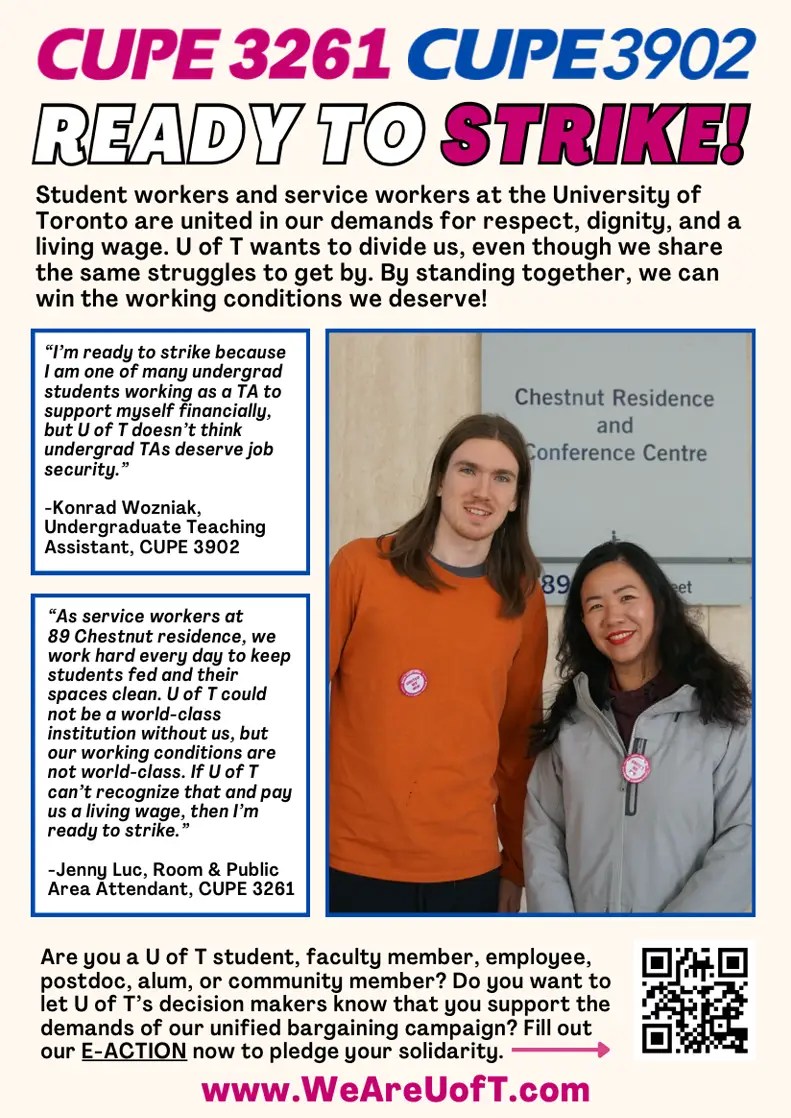
Together, CUPE 3902 (units 1 & 5) and CUPE 3261 (units 1-3) represent postdocs, course instructors, facility operators, veterinary technicians, caretakers, landscape workers, cooks at U of T and workers at the Chestnut student residence. 
The two unions decided to coordinate their bargaining by negotiating together, have similar communications materials and leverage each other’s strength to make wins at the bargaining table.
CUPE Bargaining Case Study
We Are Stronger Together

 They called for respect, dignity, and a living wage.

Inconsistent agreements

The conditions at U of T made this kind of convergence ideal. As the university emerged from COVID-19 lockdowns, there was a huge range of agreements that U of T had developed among the staff that were inconsistent. Working from home versus mandating that people come to work, a lack of support for teachers, and being forced to go on layoff or come into the workplace when no one was there.

A commitment to coordinating

Workers wondered: why are we in different bargaining units and locals? From there, more stewards and leaders came into the conversation. Each local had motions at general membership meetings to commit to coordinating their bargaining strategies.

Coordination 🔍

Negotiation 🤝

Communication 📣

Strategy 🎯

Conversation 💬

Ideas 💡

Wins 🔥

Unity ⚡️

Power of Workers 💪

Stewards 🤩

Leaders 🙌

Effective Materials 👀

A rapport des forces.

There are 2000 service workers (CUPE 3261) who, while forming a large unit, do not have the numbers to shut down the campus in case of a strike.

The 6000 course instructors and postdocs (CUPE 3902) are not always on campus and also would have a difficult time shutting down campus in event of a strike. Convergence was a strategic idea to build the power of workers represented by both unions.

Workers have to be united.

Ēriks Bredovskis
Ēriks BredovskisCUPE 3902 President

If we want to beat the boss, workers have to be united. These artificial lines of scope, roles or turf have to be crossed because they benefit the boss.

Bargaining Strategies

Lining up the contracts.

1
CUPE 3902 Unit 5

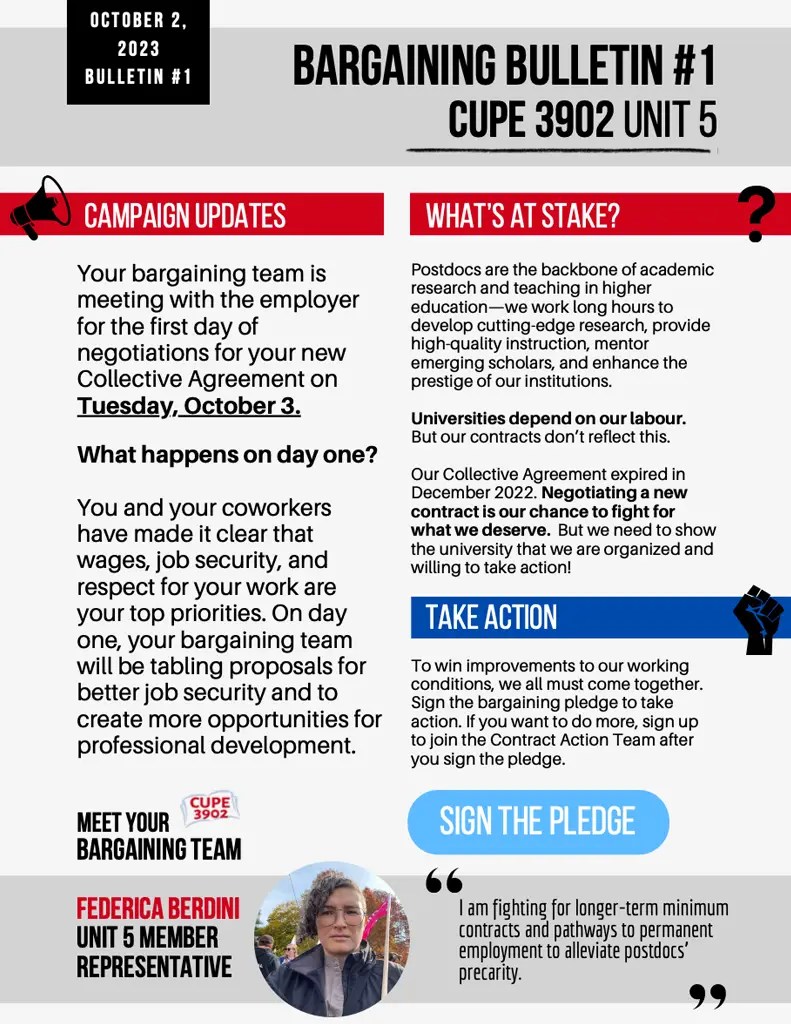
CUPE 3902 Unit 5’s contract expired in December 2022

2
Casual Workers

The contract for casual, full-time and part-time workers at CUPE 3261 expired at the end of June of 2023

3
CUPE 3902 Unit 1 and CUPE 3261 Chestnut

3902 Unit 1’s and 3261 Chestnut contracts were set to expire in December 2023

CUPE 3261’s contract expiring in the summer also posed a problem as there are fewer students on campus in the summer, making pressure tactics more difficult.

In Fall 2023, the leadership started to look at the timelines that all of the contracts had. In December 2023, a mini conference was held for all the bargaining teams and the bargaining support committee. They agreed on a general timeline to file for conciliation together and to file a no board report.

One challenge

Some members expressed concern that the strategy would leave their contracts expired for too long. In November 2023, there were some members that wanted to settle because they thought that the university’s offer was the best they could get.

Celebrating the Wins

 A solid, unified campaign.

equal pay

increase

equal work

funding

sick leave

commitment

discounts

transit

free meals

health plan

salary

minimum wage

promise

CUPE 3902

Course instructors got equal pay for equal work, increases to funding packages equal to about three rounds worth of gains. Plus they got a commitment from the university to study transit discounts for workers.

For postdocs, their health plan went from essentially a part-time plan to a full-time plan. Their minimum salary went from $36,000 and up to $50,000 per year.

CUPE 3261

Full-time and part-time workers got a $25/h minimum wage for all workers, up from as low as $19/h.

Casual workers got a promise for $20/h by 2025 and an equal pay for equal work provision.

For Chestnut Residence workers, they got a $25/h minimum wage, they got an increase in sick leave from 3 days to 15 weeks and they had the right to have free meals restored, a benefit that was removed by U of T during the pandemic.

Have a question?

🤔 Case study frequently asked questions.